.webp)


Announcements
–
2 min read


Back to Swarm Blog
FOR IMMEDIATE RELEASE
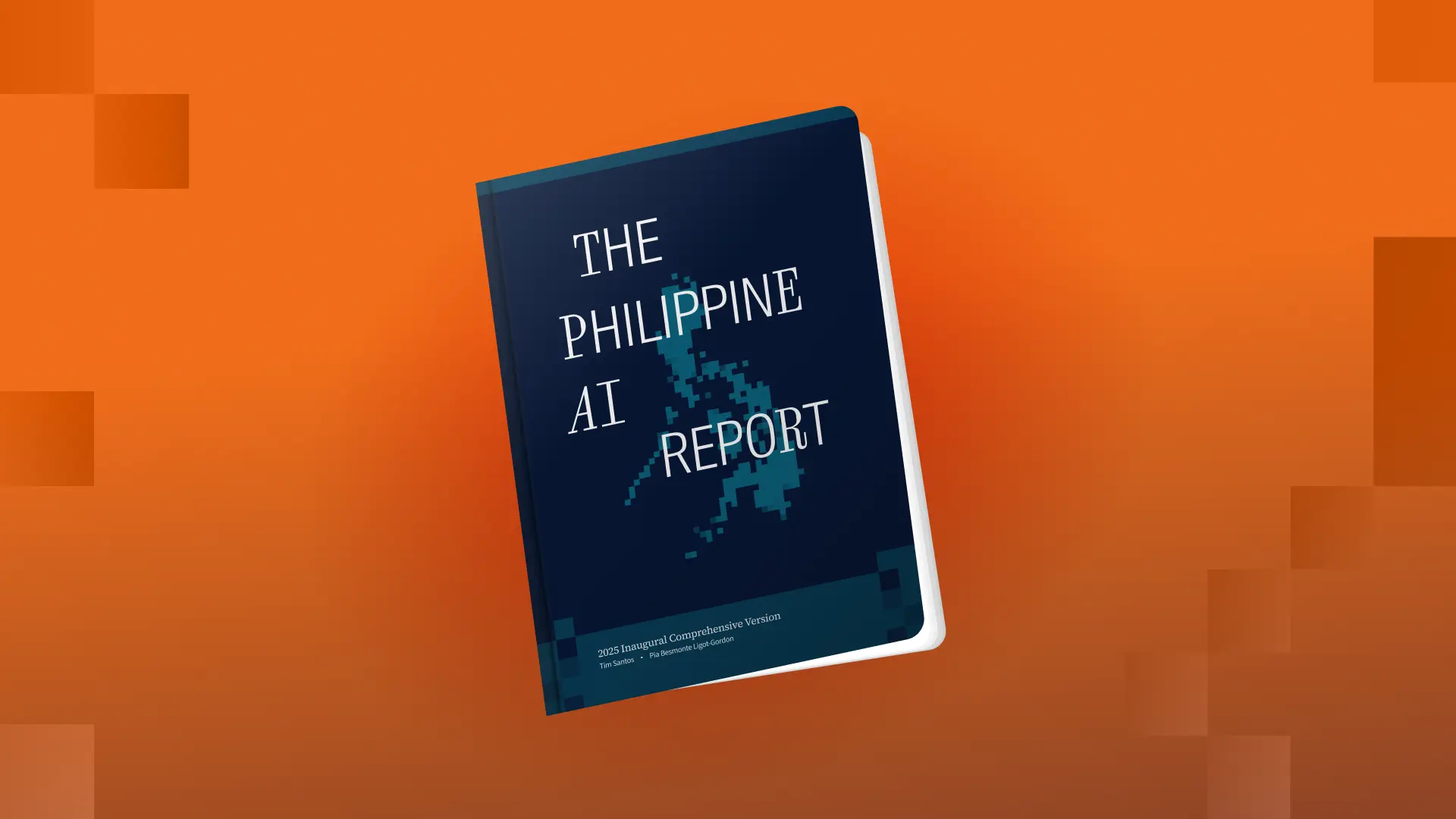
Manila, Philippines — The Philippine AI Report 2026, produced by Swarm, is the largest published survey of enterprise AI adoption in the Philippines to date. Based on a nationwide survey of 175 organizations across technology, financial services, healthcare, retail, manufacturing, government, education, and nonprofit sectors, the report shows where Philippine enterprises are today and what it will take to scale.
“We started this research because we wanted to understand what AI adoption actually looks like in the Philippines, and have data to back it,” says Tim Santos, Project Lead. “Global reports track adoption curves and investment trends. They do not reflect the Philippine nuance on how decisions get made here, what talent is available, or how ROI requirements shape implementation timelines. This report gives business leaders the evidence they need to plan what comes next.”
The headline finding: 92% of Philippine organizations have used AI in some capacity. The appetite is there, and the momentum is real.
But adoption alone does not equal scale. Sixty-five percent of organizations remain at the proof-of-concept stage. That gap between experimentation and enterprise rollout is now the defining challenge.
AI strategy in the Philippines is increasingly a C-suite priority. Sixty-one percent of organizations report that CEOs, CTOs, or equivalent senior leaders directly lead AI initiatives.
Leadership commitment exists. The next challenge is building the operating foundation that turns intent into production systems, including governance, data pipelines, security controls, and clear ownership across teams.
Organizations are already seeing returns in specific workflow areas.
Internal automation leads at 65% deployment, followed by content creation at 64% and data analysis and decision support at 60%. These are practical use cases where AI reduces manual effort and accelerates output.
Two constraints stand between proof-of-concept and production: skills and security.
AI talent scarcity is the top barrier, cited by 57% of organizations. Security and privacy concerns follow at 40%.
Individual AI adoption is outpacing organizational controls: 83% of organizations report employees using ChatGPT, with many paying out of pocket for premium subscriptions. The result is “shadow AI,” where employees use ungoverned tools that create security and compliance exposure. This grassroots enthusiasm is an advantage when guided well, and a risk when left unmanaged.
The tools landscape tells its own story.
ChatGPT, Gemini, and Copilot dominate usage, while only 12% report using machine learning frameworks like PyTorch or TensorFlow, and only 10% use NVIDIA’s CUDA for AI computation. Most Philippine enterprises are using pre-built AI services. That speeds up experimentation, but it can limit customization and long-term control if organizations do not build internal capability alongside adoption.
Nearly half of organizations (47%) report they are already in the AI application development stage, building AI-powered products. The ambitions are growing.
Over the next 12 to 18 months, organizations expect significant expansion:
Whether these plans translate into execution depends on how quickly organizations close the infrastructure and talent gaps identified in this report.
The Philippine AI Report goes beyond survey findings. It includes a mapping of the Philippine AI policy landscape, covering 19 pending AI-related bills across governance frameworks, labor protection, deepfake regulation, and sectoral applications.
It also benchmarks the Philippines against five ASEAN neighbors: Singapore, Malaysia, Indonesia, Vietnam, and Thailand. The report reviews national AI strategies, coordinating bodies, governance frameworks, and investment commitments to help leaders understand the regional context for competitiveness.
"Seeing 92% adoption is a strong signal of momentum. The next question is integration," says Dexter Ligot-Gordon, CEO of Swarm. "Many organizations are using AI detached from their enterprise systems. The real ROI shows up when AI is embedded across core business platforms, with governance, auditability, and workflow orchestration built in. Without proper integration and governance, ROI won’t compound, while shadow AI would remain a real risk. Philippine organizations already have executive commitment and workforce enthusiasm. The next step is building the enterprise architecture that turns pilot projects into production systems.”
“What the report shows is that enthusiasm is not our constraint. The real challenge for the Philippines is institutionalization: moving from isolated pilots to enterprise-wide architecture with governance, security, and clear ownership embedded by design,” says Sherwin Pelayo, Executive Director of the Analytics and Artificial Intelligence Association of the Philippines. “Through the National AI Upskilling Roadmap, now part of the National Education and Workforce Development Plan, we are equipping Filipino talent and leaders to build and govern AI at scale—so we move from consuming foreign systems to shaping our own economic future.”
The full Philippine AI Report is available for download at https://sw.army/phaireport. The report includes detailed survey findings, expert commentaries from industry and policy leaders, national AI policy analysis, ASEAN benchmarks, and a complete data appendix with question-by-question results.
For business leaders looking for a concise overview of the key findings and their strategic implications, the Philippine AI Report Executive Brief is available at https://sw.army/phaibrief.
For questions about the report’s findings, interview questions, or speaking engagement inquiries, contact: Pia Besmonte, Lead Writer, Philippine AI Report: pia@swarm.work
For enterprise partnership inquiries: Chito Lapitan, Director of Sales, Solutions and Ecosystem Partnerships: chito@swarm.work
For industry and ecosystem partnership inquiries: Sherwin Pelayo, Executive Director, Analytics and Artificial Intelligence Association of the Philippines: sherwin.pelayo@aap.ph
About Swarm
Swarm is a global AI consultancy that helps enterprises move from proofs-of-concept to production. The company combines strategy consulting with a library of production-tested agentic AI solutions spanning intelligent document processing, AI-powered collections, demand forecasting, conversational AI, and computer vision. With over 100 AI projects deployed across 12 countries and teams led by practitioners from AWS, IBM, Y Combinator, and Fortune 100 companies, Swarm meets organizations wherever they are in their AI journey, from readiness assessment through deployment and optimization. Learn more at swarm.work.
About the Philippine AI Report
The Philippine AI Report 2025 is based on a nationwide survey of 175 organizations conducted between October and November 2025. The 47-question survey instrument captured perspectives from C-suite executives, senior leaders, and operational managers across more than ten industries. The report was produced by Swarm in collaboration with expert contributors from data ethics, AI research, workforce development, and enterprise implementation.


